








Hunters and trappers have exploited Canadian lynx for their fur since the 17th century. As the large-cat fur trade grew more restrictive in the 1960s and '70s, and as trapping led to the subsequent reduction of ocelot and margay populations, trappers focused their attention on the pelts of Canadian lynx.
However, the lynx population is most affected by the size of the hare population, not trappers. Lynx help control snowshoe hare and other small-mammal populations that humans often consider pests.
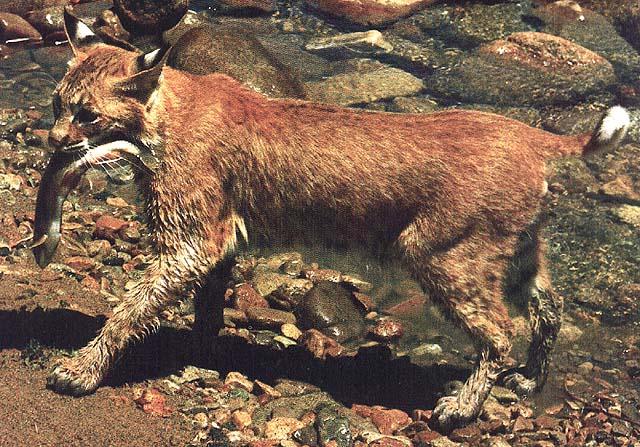
The bobcat is solitary and polygamous. The male does not aid in raising the young. Home ranges of Adirondack bobcats are the largest known for the species - 325 sq. km (125 sq. mi) for males and 86 sq. km (33 sq. mi) for females. The home range of a male may overlap those of other males and may include the home ranges of several females which do not overlap. Where home ranges overlap, adults do not use the same areas at the same time except during the breeding season. Densities vary with habitat type and prey abundance, but are usually less than one bobcat per 52 sq. km (20 sq. mi).
Scent marking, a form of chemical communication, probably plays an important role in maintaining an exclusive area by advertising occupancy.
Vocalizations, given more frequently during the breeding seasons than at other times of the year, include squeals, screams, howls, yowls, hisses and spits.