








Each kitten is blind at birth, covered with spotter fur, and weighs approximately 340 g (12 oz). The eyes open at 8-10 days, and the young nurse for 60 days, thereafter eating prey the female brings them, or when they are 3-5 months old, accompanying the female during her nightly hunts.
The young disperse during autumn or winter. The females becomes sexually mature the spring following birth; males breed a year later. A captive bobcat survived 25 years.
One Adirondack bobcat is known to have lived 16-17 years, the record for individuals living in the wild.
Female lynx mate once a year, with oestrus lasting one to two days, and raise one litter per year. Mating occurs primarily in February and March, and gestation lasts from eight to 10 weeks.

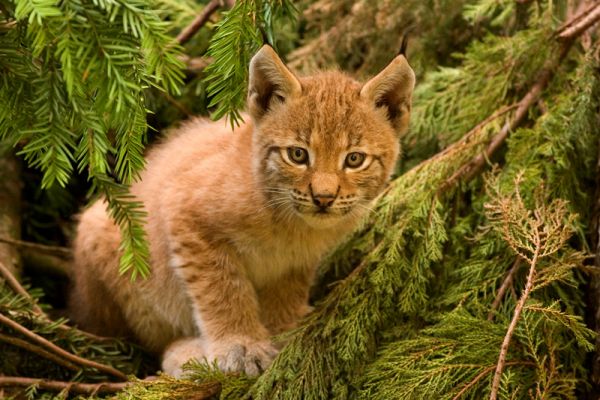

Females usually have two or three kittens per litter, though the number may vary from one to five. Kittens nurse for five months, although they eat some meat as early as 1 month old.
Males do not participate in parenting. Young lynx remain with their mothers until the following winter's mating season, and siblings sometimes stay together for a while after separating from the mother.
Females are sexually mature at 21 months, and males at 33 months.